How to Use Social Proof Ecommerce: Build Trust & Sales
Have you ever wondered why people trust online reviews more than flashy advertisements? Or why customer testimonials can turn hesitation into instant trust? The answer lies in how to use social proof ecommerce effectively. Social proof is not just a buzzword—it’s a proven psychological principle that drives purchase decisions by showing that others have already placed their trust in a brand.
Think about the last time you bought something online. Did you scroll down to check customer reviews before hitting “buy now”? Did a five-star rating or a testimonial from another buyer reassure you? This simple act of seeking validation is at the core of social proof, and when applied smartly in ecommerce, it transforms browsers into loyal buyers.
In fact, social proof goes beyond just reviews. It includes testimonials, user-generated content (UGC), and even subtle cues like trust badges. By weaving these elements into your online store, you create a persuasive environment that reassures customers they are making the right decision. To explore how this works in real-life strategies, check out this step-by-step growth plan on getting 1000 subscribers on YouTube. The same principles apply to building credibility in ecommerce.
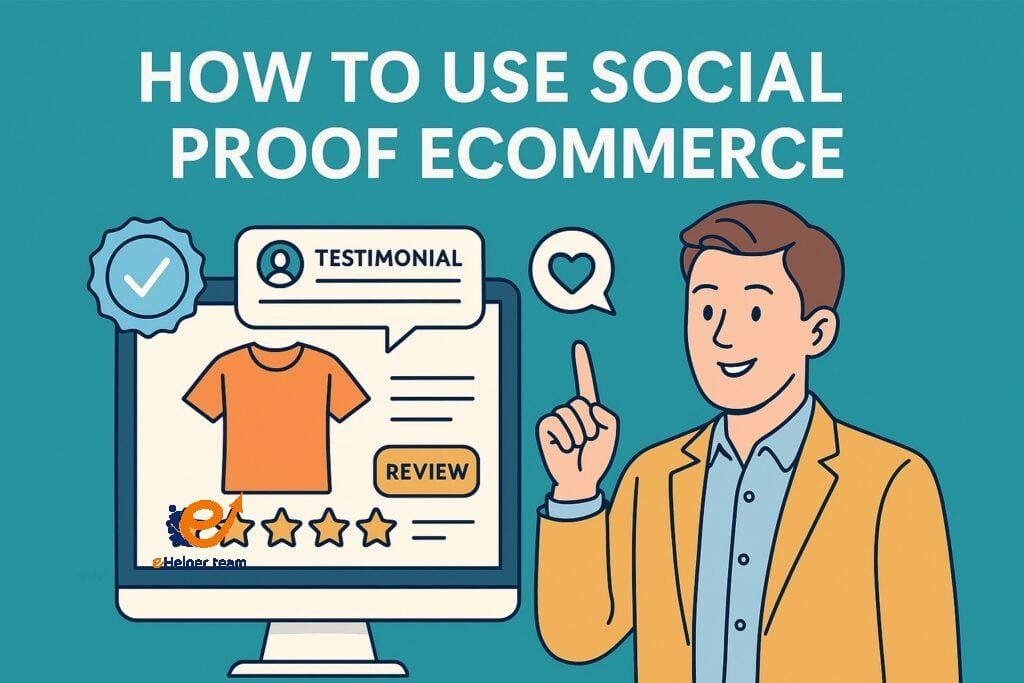


Understanding the Psychology Behind Social Proof
What Is Social Proof in Ecommerce?
Social proof is the influence that other people’s actions and opinions have on our own behavior. In ecommerce, it manifests through reviews, testimonials, and even user engagement. It is based on the idea that if others trust a product, new customers are more likely to follow.
Why Do Customers Trust Social Proof Over Ads?
Reviews feel authentic and unbiased
Testimonials show real-world experiences
UGC provides relatable, peer-level validation
Trust badges create a sense of security
The Science of Decision-Making
Humans are wired to seek guidance in uncertain situations. Social proof acts as that guiding light, offering reassurance that others have tested the waters before us.
How to Use Social Proof Ecommerce: Key Strategies
1. Getting Customer Reviews Effectively
Encouraging customers to leave reviews is one of the most powerful ways to build credibility. Consider:
Automated post-purchase review requests
Incentives like discounts on next orders
Easy-to-use review submission platforms
2. Displaying Testimonials for Maximum Impact
Testimonials, especially when paired with customer photos or videos, humanize your brand. Place them strategically on:
Product pages
Landing pages
Checkout pages
3. Leveraging User-Generated Content (UGC)
UGC builds trust because it feels genuine. Examples include:
Customers sharing photos using your product
Hashtag campaigns
Influencer collaborations
4. Trust Badges and Security Signals
Adding recognizable trust symbols, such as SSL certificates or money-back guarantees, can dramatically reduce hesitation.
Case Study: Selling with Trust in Digital Platforms
One excellent example of using social proof comes from content creators who sell merchandise through their channels. They rely heavily on reviews and fan-generated content to drive sales. If you’re curious about how this works, explore this guide on step-by-step growth plan on getting 1000 subscribers on YouTube. It highlights how trust and community validation fuel purchases.
Best Practices for Incorporating Social Proof in Ecommerce
1.Optimize Placement of Reviews
Place reviews where purchase decisions happen—right next to product descriptions or call-to-action buttons.
2.Balance Positive and Negative Reviews
Oddly enough, a mix of reviews builds more trust than an all-perfect set of five-star ratings. Customers want transparency.
3.Feature Real Customers
Show real names, faces, and details in testimonials to make them relatable and credible.
4.Integrate with Social Media
Sharing testimonials across social platforms amplifies credibility and boosts reach.
Comparison Table: Types of Social Proof in Ecommerce
| Type of Social Proof | Example Usage | Impact on Trust |
|---|---|---|
| Customer Reviews | 4.8-star average rating on product page | High |
| Testimonials | Video testimonials from buyers | Very High |
| User-Generated Content | Instagram posts with branded hashtags | High |
| Trust Badges | “Verified Purchase” or SSL security logos | Moderate to High |
Integrating Social Proof into Your Marketing Strategy
Building social proof is not just about sprinkling reviews on a page—it’s about making it a core element of your marketing approach. Whether through targeted campaigns or influencer partnerships, social proof should be embedded into your customer journey. To dive deeper into building a strong overall plan, consider reading about why you need to build a social media marketing strategy.
Advanced Types of Social Proof in Ecommerce
1. Expert Endorsements
Instead of just customer voices, expert approval can elevate credibility. For example:
A skincare product backed by dermatologists
A fitness gadget recommended by professional trainers
Such endorsements tap into authority bias—when people follow advice from credible experts.
2. Celebrity & Influencer Collaborations
Celebrities and influencers serve as powerful amplifiers of trust. By showing that a well-known figure uses or recommends a product, brands can:
Reach new audiences quickly
Strengthen emotional connection with fans
Leverage perceived credibility
This goes beyond traditional advertising since fans see influencers as authentic voices.
3. Real-Time Activity Notifications
Ever noticed a pop-up saying “John from New York just bought this product”?
These real-time notifications are forms of live social proof that:
Create urgency (fear of missing out – FOMO)
Build trust by showing active engagement
Motivate hesitant buyers to act quickly
4. Case Studies and Success Stories
Unlike short testimonials, case studies dive deeper into customer journeys.
Show how a product solved a real problem
Provide measurable results (e.g., “Increased sales by 35%”)
Position your brand as a solution-provider
5. Numbers as Proof
Statistics are also a form of social proof. Examples include:
“Over 10,000 happy customers”
“5 million downloads worldwide”
“Trusted by Fortune 500 companies”
Big numbers create a sense of scale and reliability, especially when prominently displayed.
Challenges of Using Social Proof in Ecommerce
1. Fake Reviews
One of the biggest risks is fake or manipulated reviews, which can backfire if exposed. Brands must ensure authenticity and transparency.
2. Overwhelming Customers
Too much social proof can feel cluttered. Balance is key—highlight the most impactful reviews or badges.
3. Cultural Differences
Social proof may work differently across regions. For example:
US/UK customers might value trust badges and verified purchase labels.
Asian markets may put more weight on influencer endorsements or community-driven proof.
Future Trends in Social Proof for Ecommerce
1. AI-Driven Review Summaries
Artificial intelligence is making it easier to analyze thousands of reviews and present them as summarized insights like:
“85% of customers loved the product quality”
2. Video Testimonials
Video adds tone, emotion, and authenticity, making testimonials more persuasive than text-based reviews.
3. Interactive Social Proof
Instead of static badges, brands are moving toward interactive proof such as:
Customer Q&A sections
Live chat with previous buyers
Social feeds integrated into product pages
Checklist: How to Build Strong Social Proof in Ecommerce
Collect and display genuine customer reviews
Add trust badges (SSL, payment guarantees, etc.)
Use user-generated content (UGC) in social media feeds
Showcase numbers (downloads, happy customers)
Highlight expert endorsements or celebrity recommendations
Use real-time purchase notifications to spark urgency
Keep proof authentic and balanced to avoid skepticism.
Frequently Asked Questions (FAQs)
Q1: How can I get more customer reviews for my ecommerce store?
can automate review requests via email, offer small incentives, or simplify the review process with one-click options.
Q2: Should I display negative reviews as well?
Yes. Negative reviews add authenticity. A balanced profile is more trustworthy than an all-perfect set of reviews.
Q3: What’s the difference between testimonials and reviews?
Reviews are often star-based and brief, while testimonials are more detailed stories that highlight customer satisfaction.
Q4: How does user-generated content (UGC) influence trust?
UGC makes customers feel connected to real people using your product. It’s relatable and drives authenticity.
Q5: Are trust badges really effective in ecommerce?
Yes. They provide instant reassurance that transactions are secure, which can reduce cart abandonment.
Conclusion
The power of how to use social proof ecommerce lies in its ability to transform uncertainty into confidence. Reviews, testimonials, UGC, and trust badges all play distinct but complementary roles in creating an environment where customers feel safe to buy. By thoughtfully integrating these elements into your ecommerce strategy, you not only boost conversions but also build long-term trust with your audience.
For those ready to take the next step, start incorporating customer voices and strategic trust signals into your store today. Trust is the ultimate currency in ecommerce—make sure your brand is rich in it.


